Interiors
Shared bedroom: planning for different daily routines
Plan a shared bedroom around each person’s schedule, reading habits, storage and routes through the room. Prepare key decisions before buying furniture.
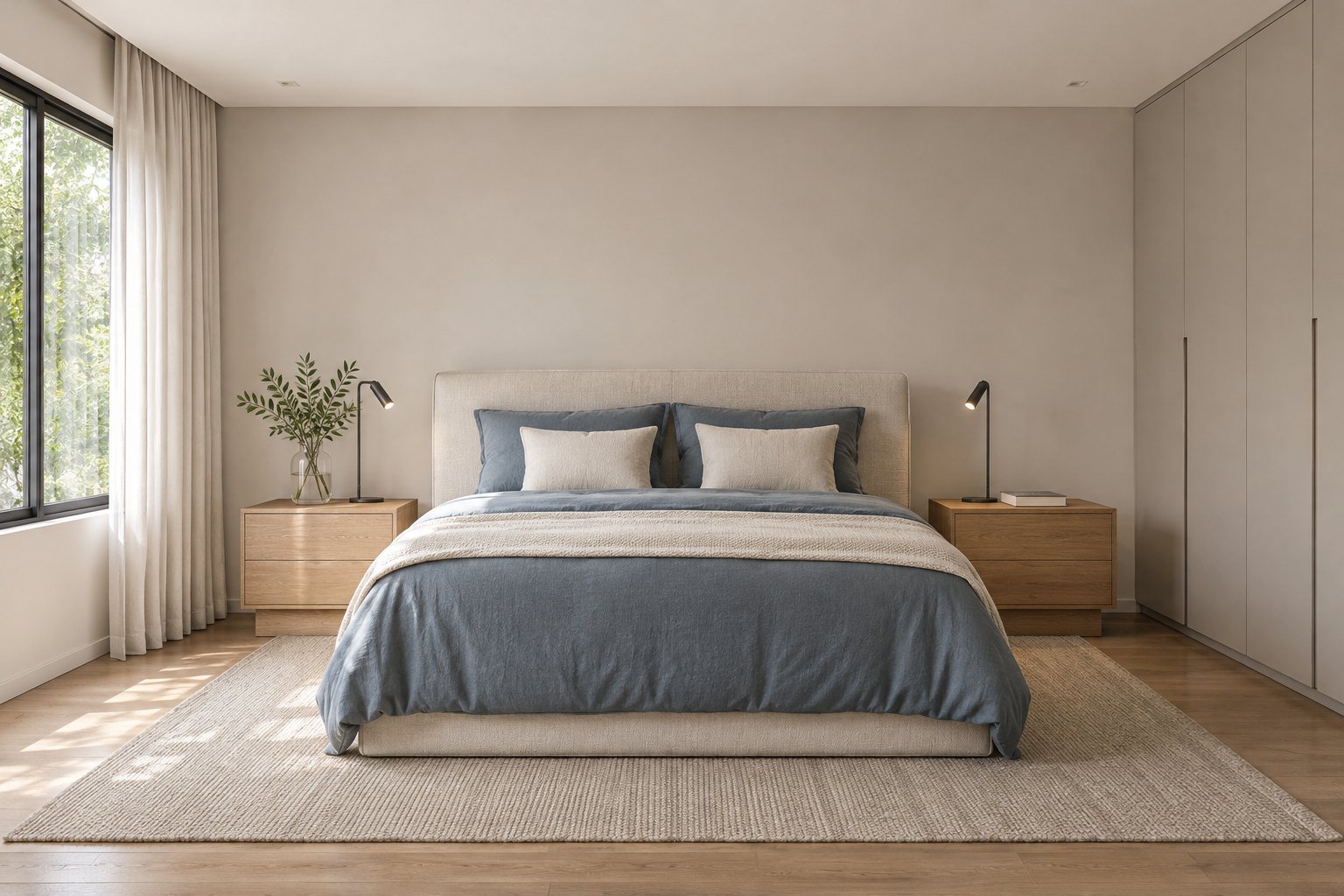
To plan a shared bedroom, compare both occupants’ routines before choosing the bed and wardrobes. Note when each person rests, which activities take place in the room and which belongings each person uses. This information helps you discuss lighting, storage and circulation together.
A bedroom may look organized during the day yet work poorly when one person needs to get dressed while the other is still asleep. Understanding these overlapping routines matters as much as choosing colors and finishes.
For anyone preparing an interior design project in Campinas and the surrounding area, the steps below help bring specific information to the first discussion. They organize needs without prescribing a layout or dimensions for every bedroom.
Compare schedules before seeking symmetry
Write down when each person wakes up, gets dressed, reads and rests on a typical day. Include occasional situations that matter, such as shift work or frequent access to the bathroom at night. Each occupant should be able to describe their own experience.
Two matching sides in a picture do not guarantee that everyone’s needs are met. One person may use a lamp and books; the other may need a clear surface for personal items. Explain these differences when considering options, rather than assuming the room must have two identical halves.
Turn conflicts into questions for the design
The table describes hypothetical situations, not client cases. Use it to explain the difficulty before choosing a solution. Avoid arriving at the discussion with only a product that seems to solve the problem.
| Situation | What to observe | Useful question |
|---|---|---|
| One occupant reads later | Where the other person notices the light | How could the lighting controls and direction be planned? |
| Departure times differ | Which items need to be found in the morning | What could remain accessible without rearranging the room? |
| The wardrobe is used while someone walks past | Doors, drawers and routes while in use | How can opening mechanisms be assessed alongside the layout? |
Allocate storage according to actual use
List the clothes, accessories, bed linen and other items that will actually stay in the room. Separate daily from occasional use and identify personal and shared belongings. An approximate volume is more useful than simply asking for a large wardrobe.
Photograph any furniture you want to keep and record preliminary dimensions. Have the professional check measurements and opening mechanisms before you order anything. Wardrobe depth, bed position and circulation need to be assessed in the same study.
Discuss lighting at different times
Observe daylight in the morning and afternoon, window position and noticeable reflections. Explain whether the bedroom is used for reading, screens or preparing clothes. If possible, bring photos taken when discomfort occurs.
The design can explore ways to control light for different activities, but fixtures, controls and installations need to be coordinated with the property. Do not buy a set merely because it reproduces an attractive reference.
Compare options with both routines in mind
When assessing a layout, mentally go through a full day: getting up, opening the wardrobe, making the bed, putting things away and going to sleep. Note which conflicts each option resolves and which remain. A change that helps only at bedtime may create another difficulty in the morning.
Agree on priorities before choosing finishes. To begin a discussion with Dedicati, gather current photos, details of furniture to be retained and a summary of each occupant’s schedule. Also mention individual mobility or support needs that should be assessed during design.
From reading to deciding
Your next step
Describe both routines in the Initial Analysis. The interior design can start from the room’s actual conflicts to explore an arrangement suited to its occupants.
Explore our Interior Design service or share your project in the initial analysis.