Interiors
Furniture you want to keep: how to include it in your design brief
Prepare an inventory of furniture you want to keep in your interior design: dimensions, uses, condition, sentimental value, and questions to resolve before buying.
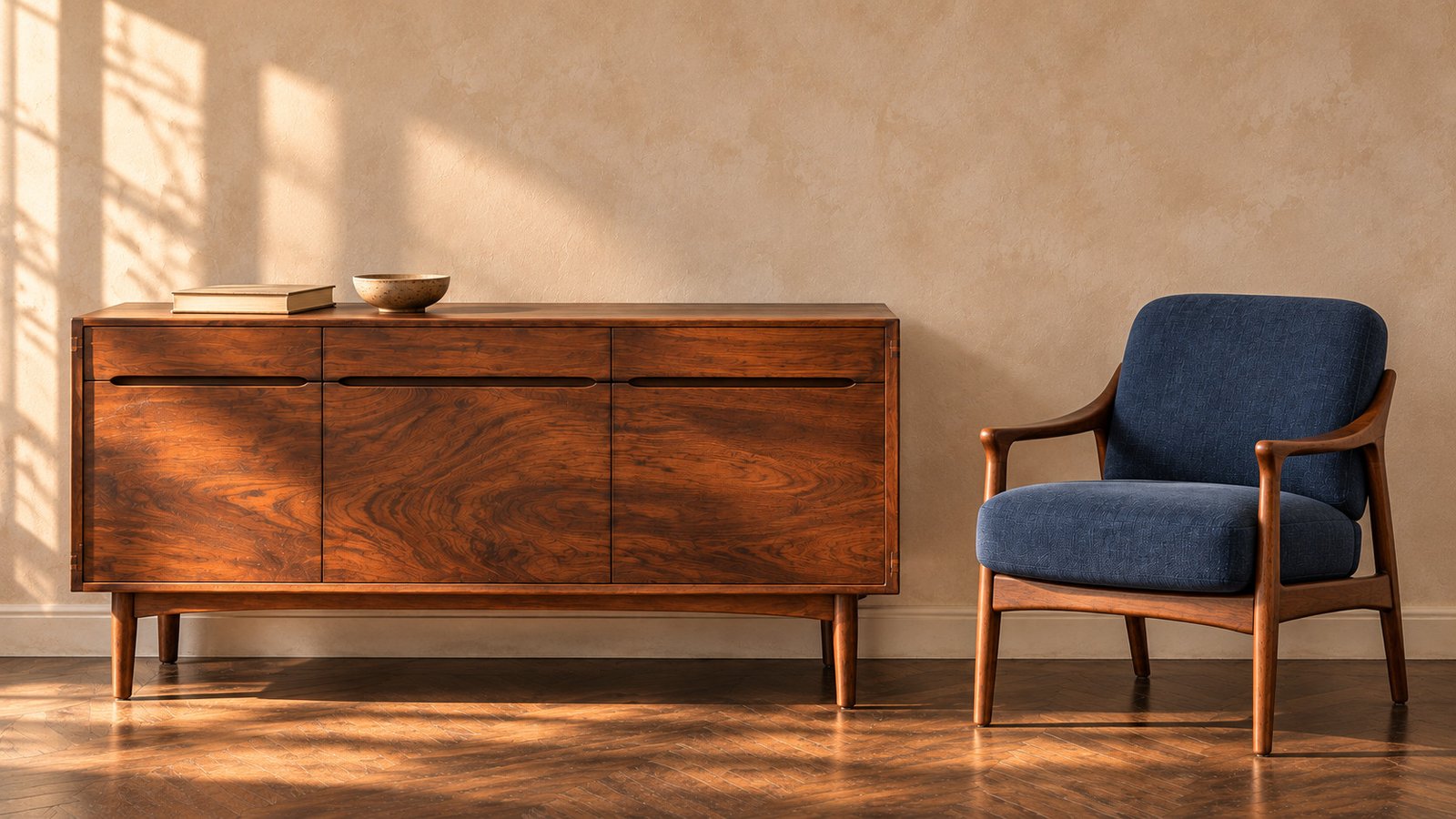
To include existing furniture in an interior design project, document each piece with photographs, preliminary dimensions, how it is used, its observed condition, and why you want to keep it. Separate pieces that must stay from those that could be adapted or assessed. The final decision should consider the room, its users, and the feasibility of any changes to the furniture.
A new apartment does not require every piece of furniture to be new. A family table, a comfortable armchair, or an existing sideboard can be part of the brief from the start. Bringing these priorities forward early makes it easier to discuss the room as a whole.
For anyone preparing an interior design project in Campinas and the surrounding area, an inventory helps avoid deciding whether to keep a piece based only on its color or photograph. The guide below organizes information and questions without presenting the illustrative images as a real project.
Explain why the piece matters
Record why you want to keep each piece: comfort, frequent use, sentimental value, or suitability for an activity. Distinguish essential pieces from those you would like to reuse if a suitable solution is found. This helps establish priorities when space requires choices.
Also describe what does not work today. A much-loved table may need a different location; a useful cabinet may not accommodate the items you now store. Keeping a piece does not necessarily mean repeating its current position or purpose.
Gather clearly identified photographs and measurements
Photograph the whole piece, its sides, and relevant details. Record width, depth, and height as preliminary measurements, noting who measured them and what needs checking. Explain whether movable parts, extensions, doors, or drawers change the space occupied during use.
If the piece will move to another property, record its location and discuss access and transport conditions with those responsible. Fitting into a room drawing does not prove that furniture can pass through doors, lifts, or stairs, or that it can be dismantled.
Create a record that can be used throughout the design process
Use the same identification in photographs and in the list. The table provides fields to complete, not information about a real piece. It supports discussions about keeping or adapting furniture without relying only on residents’ memories.
| Field | What to record |
|---|---|
| Identification and priority | Piece name and whether keeping it is essential or desirable. |
| Use | Who uses it, for which activity, and how often. |
| Dimensions | Preliminary measurements and parts that open or move. |
| Observed condition | Photographs and a description of what needs assessment. |
| Outstanding decision | Information or assessment needed before confirming the choice. |
Assess adaptations before authorizing work
Changing a finish, upholstery, or structure should not be an automatic decision. Ask the appropriate professional to assess it, confirm the proposed work, and record what can and cannot be retained. This inventory does not identify materials or prescribe restoration techniques.
Compare options against the intended use and the overall design. Ask proposals to clarify transport, materials, alterations, and service limitations. Do not assume savings or equivalent performance simply because the piece already exists.
Confirm retained pieces before buying new ones
Ask for retained furniture to appear in the layout alternatives and the approved decision record. Identify anything that depends on a survey, assessment, or supplier response. New pieces can then be discussed using consistent information.
If a choice changes, update the record and tell the designer before purchasing. A change in dimensions or opening mechanism may affect other elements. The inventory aims to keep these decisions clear throughout the project.
From reading to deciding
Your next step
Select your priority furniture pieces and prepare a record for each, including photographs and questions. Bring this material to Initial Analysis to discuss your interior design project with Dedicati.
Explore our Interior Design service or share your project in the initial analysis.