Interiors
An apartment balcony for cooking and dining: what to define before design
Organize your dining balcony design: define uses, appliances, storage, and its connection to the living room before buying furniture and finishes.
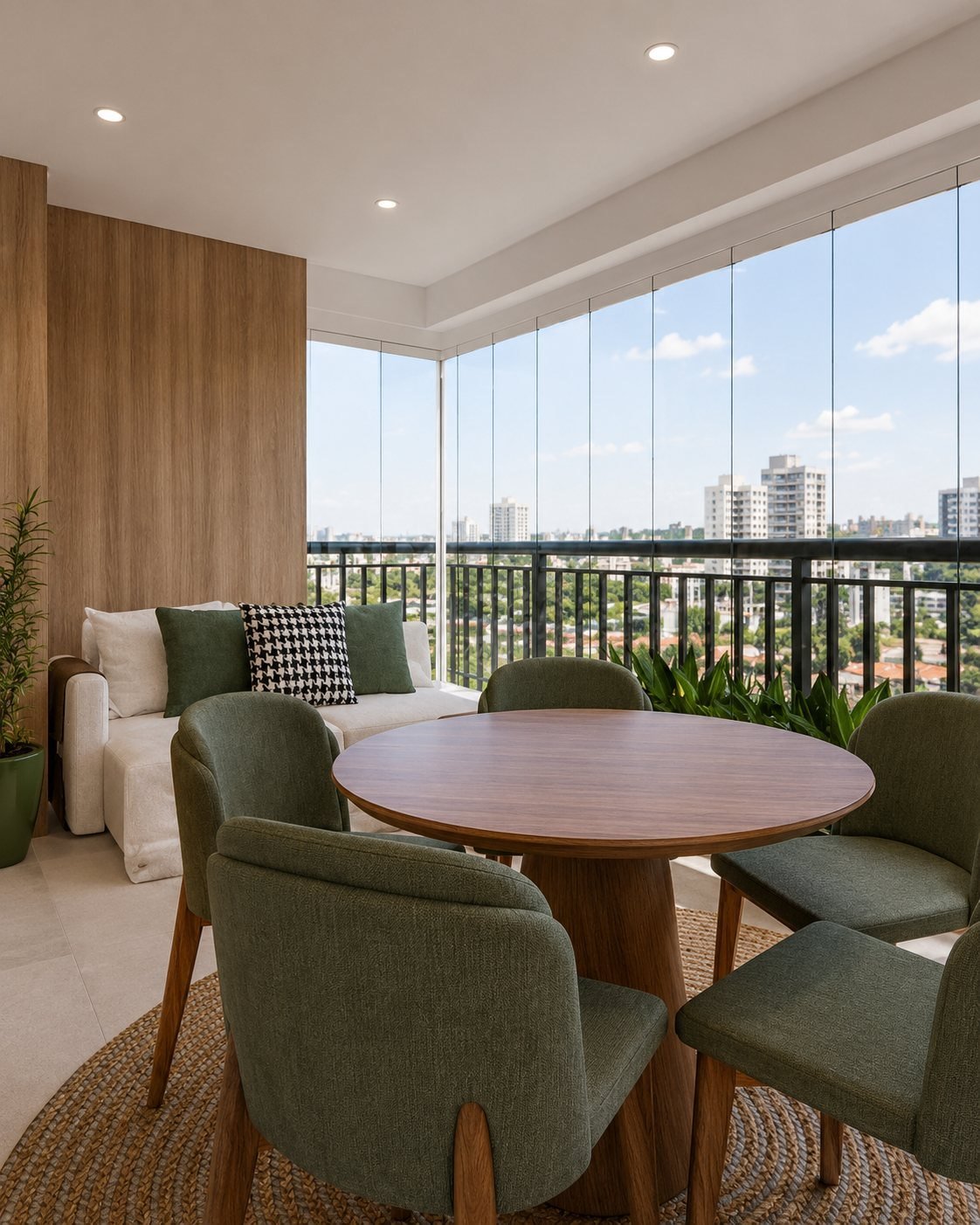
Designing a balcony for cooking and dining starts with how it will be used: meals, gatherings, food preparation, or relaxation. Then compare layouts, appliances, storage, and connections to other rooms, considering the apartment's existing conditions and applicable condominium guidance.
A balcony often brings many expectations into a limited space. Entertaining friends may compete with everyday family use, a reading corner, or storage. Before turning every wish into a shopping list, decide which uses take priority.
The term gourmet does not determine what the space needs. A coherent proposal starts with your routine, how often you entertain, and the apartment's conditions. This helps select furniture and appliances with a clear purpose, rather than filling the space based on another project.
Compare everyday use with entertaining
Describe an ordinary day and a typical gathering. How many people stay there? Who prepares food and serves it? Do meals take place on the balcony or in the living room? These answers support a concrete discussion of work surfaces, seating, and circulation.
Consider the time when the balcony is not used for entertaining. If it also supports relaxation, work, or play, that role deserves a place in the design. Avoid organizing the whole area solely around the largest occasional gathering.
Gather existing conditions and condominium guidance
Collect the available plan, property manual, and information about elements already delivered. Explain what you intend to retain or alter. Record conditions observed throughout the day, such as sunlight, rain exposure, and views toward neighboring spaces.
Request current condominium guidance before considering changes to enclosures, equipment, or other elements. Share it with the design team for assessment. A solution in another apartment does not establish that it is applicable to yours.
Define the purpose of each appliance and work surface
List desired appliances and explain how they would be used. Separate everyday equipment from items included only because they appear in references. Gather models and manufacturer data so installation, use, and maintenance can be assessed before purchasing.
For the countertop, describe tasks: placing ingredients, serving dishes, preparing drinks, or storing utensils. Compare these activities with seating areas. The design should explain how everything works together, without treating a countertop or appliance as a guarantee of convenience.
Assess furniture with chairs and doors in use
When comparing tables, benches, and armchairs, consider use rather than only the furniture's closed outline. A chair pulled out, someone serving, and an open door all belong in the assessment. Bring dimensions of furniture you want to reuse.
The same applies to cabinets: identify their contents and how they will be accessed. Ask how the space will be organized after a gathering, including trays, serving pieces, and portable appliances. The number of cabinet doors alone does not show actual storage capacity.
| Priority use | What to clarify in the design |
|---|---|
| Family meals | Seating and routes to supporting surfaces. |
| Entertaining guests | How to prepare, serve, and reorganize the space. |
| Relaxation | Furniture, privacy, and conditions observed during the day. |
| Utensil storage | Items, frequency of use, and access to storage. |
Connect the balcony with the living room and maintenance needs
Observe views from the living room, how people move through the apartment, and where shared supporting surfaces are located. Discuss colors and materials alongside these relationships. Visual integration does not necessarily mean removing existing elements; alternatives depend on assessing the whole.
Finally, describe cleaning routines and the care you want to maintain. Confirm material suitability for each application and the site's conditions with those responsible. Record approved specifications to compare proposals and check suggested substitutions during purchasing.
Frequently asked questions
Does every dining balcony need many appliances?
Selection should reflect intended uses and apartment conditions. Explain how each appliance will be used and assess its role before purchasing or reserving installation space.
Can I repeat another apartment's balcony design?
Use the reference to explain what interests you, but confirm conditions, dimensions, installation, and condominium guidance for your property. An image of another room does not resolve those checks.
How can I plan for guests without losing everyday space?
Compare daily use with typical gatherings and prioritize needs. Assess alternatives with furniture in use and consider where items used only for guests will be stored.
From reading to deciding
Your next step
To discuss your balcony, gather the available plan, condominium guidance, and a description of priority uses. Dedicati's initial analysis helps you share this information and discuss the interior design scope.
Explore our Interior Design service or share your project in the initial analysis.


